



E-scooters and e-bikes are transforming urban commuting with eco-friendly, efficient transport options. This guide compares their design, cost, performance, portability, and safety to help commuters choose the best micro-mobility solution for daily travel needs.
In today’s digital landscape, urban commuting is evolving rapidly as more city residents seek flexible, eco-friendly transportation solutions. Electric micro-mobility devices have emerged as front-runners, offering zero tailpipe emissions and nimble city navigation. Among these options, e-scooters and e-bikes stand out for their convenience and ease of use. Both modes deliver cost-effective alternatives to traditional public transit or ride-hailing services, yet each brings unique features that suit different commuting patterns and personal needs. As cities continue to invest in micro-mobility programs and dedicated lanes, deciding between an e-scooter and an e-bike has become a critical choice for many urban dwellers.
Hit by increasing traffic congestion and rising environmental concerns, commuters are weighing factors such as portability, range, speed, and maintenance before making a purchase. Whether you are weaving through morning rush on a sleek stand-up scooter or cruising along bike lanes on a pedal-assist e-bike, understanding the nuances of each device will enhance your daily ride. This comprehensive guide breaks down essential comparisons in design, cost, performance, portability, safety, and sustainability to help you select the optimal ride for your daily journey. Strap on your helmet, and let’s explore the world of e-scooters versus e-bikes in the context of modern urban commute.
Design and Functionality
E-scooters and e-bikes share one core principle—electric propulsion—but diverge significantly in form factor and user interaction. E-scooters feature a compact deck, narrow handlebar stem, and small wheels designed for stand-up riding. Their intuitive twist-grip throttle engages an electric motor, which propels riders at speeds typically capped around 15 to 20 miles per hour. Folding mechanisms are standard, collapsing the deck and stem for easy storage under desks or in car trunks. This compactness makes e-scooters ideal for quick hops under five miles or connecting to public transit.
On the other hand, e-bikes resemble traditional bicycles with a reinforced frame, larger wheels, and integrated battery packs. Riders choose between pedal-assist modes or, on some models, a throttle-only option. Pedal-assist amplifies pedaling force, reducing rider effort on inclines and accelerating from stops. E-bike classifications govern speed limits: Class 1 models assist up to 20 mph, while Class 3 variants can reach 28 mph with pedal-assist. Handlebars, saddles, and suspension setups vary by style—commuter, mountain, or folding—offering ergonomic options for longer distances.
Both platforms incorporate digital displays to monitor speed, battery level, and ride distance. Advanced models offer smartphone integration for route mapping, remote locking, and performance tracking. In today’s market, customization extends to lighting packages, cargo racks, and suspension upgrades. Ultimately, your choice of design depends on comfort preferences, storage constraints, and intended trip length. The agile footprint of e-scooters excels in dense downtown zones, while the sturdy build of e-bikes supports extended rides and heavier loads.
Cost Considerations
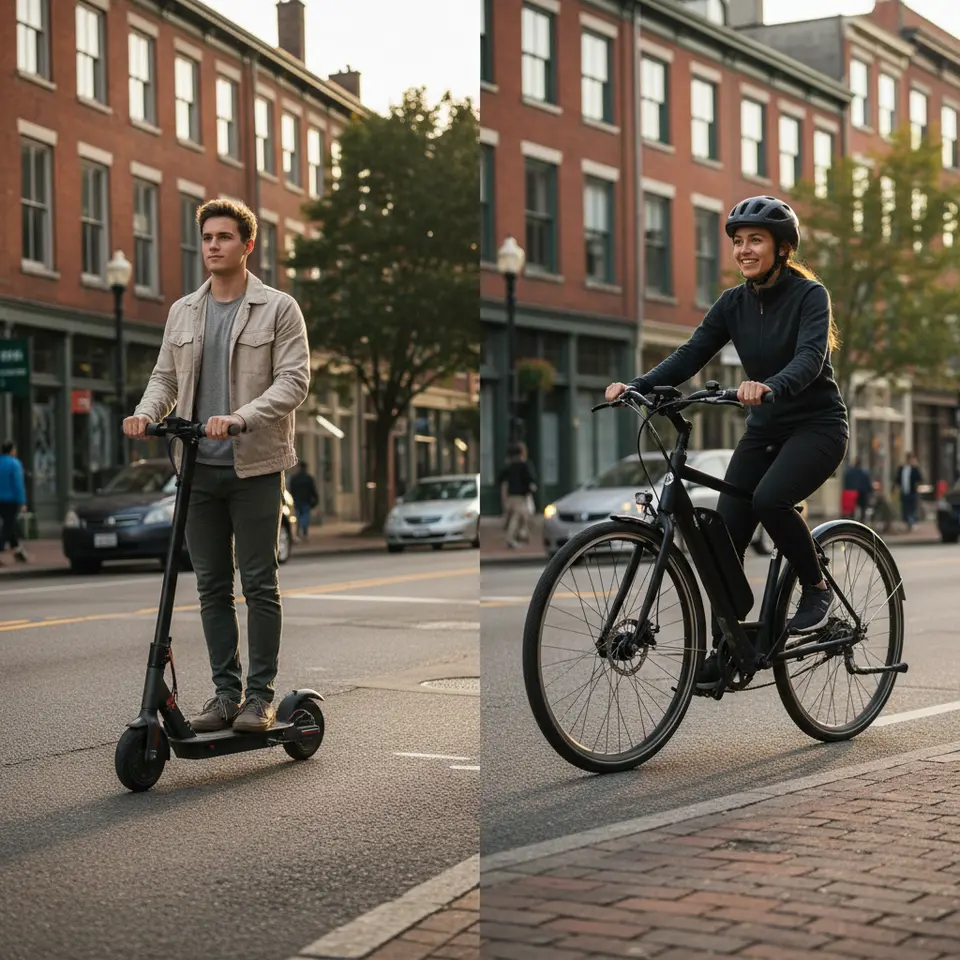
Budget often shapes the decision between an e-scooter and an e-bike for urban commute. Entry-level e-scooters start around 300, offering basic range and speed. Mid-tier models in the 500 to 800 range provide improved battery life, higher load capacity, and better suspension. Premium scooters with robust motors, long-lasting batteries, and enhanced safety features may exceed 1,200. On the other hand, e-bikes command a higher upfront investment. Basic commuter e-bikes typically sit between 800 and 1,200, while feature-rich models with advanced motor systems, hydraulic brakes, and smart displays can climb beyond 3,000.
Beyond purchase price, ongoing costs include electricity, repairs, and aftermarket parts. Charging an e-scooter or e-bike costs only pennies per full charge—less than 10 cents based on average electricity rates—making them extremely efficient for daily use. Tire replacements, brake pad swaps, and battery maintenance form the bulk of upkeep expenses. E-scooter components are affordable and often modular, but frequent fold-and-unfold cycles may demand periodic hinge lubrication and stem realignment. E-bikes require routine bicycle maintenance such as chain lubrication, derailleur tuning, and brake adjustment, alongside occasional electric drivetrain servicing.
For those unwilling to invest upfront, shared micromobility services offer pay-as-you-go access. Scooter rental fees typically start at a dollar to unlock plus fifteen to thirty cents per minute. Many cities provide subscription packages for unlimited e-bike access at a flat monthly rate, creating cost predictability for frequent riders. Assess your daily distance and usage frequency to identify the model that delivers the lowest total cost of ownership in today’s urban commute economy.
Performance and Range
Performance metrics can make or break your urban commute experience. E-scooters boast nimble acceleration and are well-suited for breeze-through traffic maneuvers. Standard models handle flat terrain at consistent speeds but may struggle on inclines above a 10 percent grade. Advertised ranges often fall between 15 and 30 miles per charge, yet real-world factors like rider weight, stop-and-go traffic, and battery age can reduce this by up to 30 percent. Riders should plan for shorter trips or carry a backup battery pack for extended outings.
E-bikes, equipped with higher-capacity batteries ranging from 400 to 750 watt-hours, deliver sustained power for commutes extending beyond ten miles. Pedal-assist technology enables better hill climbing and maintains higher average speeds, particularly on Class 3 e-bikes capped at 28 mph. Range estimates of 30 to 60 miles per charge are common, provided riders use eco or mid-power modes whenever possible. Satellite-assisted navigation and motor temperature sensors found in some advanced models optimize energy usage and prevent burnout.
Overall, e-scooters shine for short hops and first-and-last-mile connections, while e-bikes dominate longer commutes and mixed-terrain routes. Before selecting a model, map your typical rides, factor in elevation changes, and verify manufacturer specifications. Reliable performance under real commuting conditions is the key to a stress-free journey through city streets.
Portability and Storage
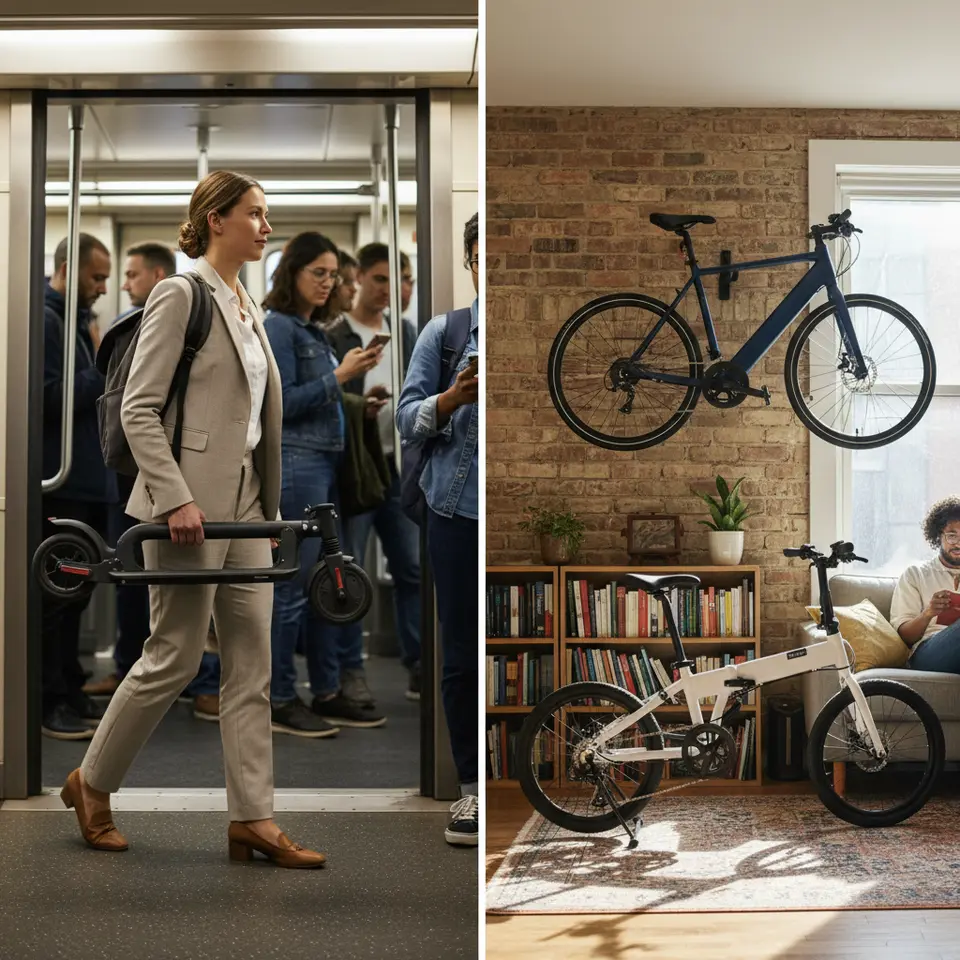
Combining micro-mobility with public transit requires compact, lightweight design. Most foldable e-scooters collapse in seconds to a slim profile that weighs between 25 and 35 pounds. This weight allows riders to carry them up stairwells, tuck them beneath public transit seats, or store them under office desks. The absence of large wheels or protruding pedals keeps the package neat and easy to stow. For apartment dwellers or co-working spaces without dedicated bike storage, e-scooters win on sheer portability.
E-bikes, typically weighing 40 to 60 pounds, pose more of a storage challenge. Foldable e-bike models exist, but their frames remain bulkier even when collapsed. A secure bike rack or indoor storage area alleviates lift concerns for standard e-bikes. Some commuters install heavy-duty wall mounts or compact floor stands to house e-bikes within apartments. For those with garages or bike rooms, the extra weight becomes less of an issue. However, carrying an e-bike up multiple flights or onto a subway car can be impractical.
Consider your end-of-ride scenario before purchasing. If your route blends scooter-friendly sidewalks with train carriages, the lightweight scooter will simplify transitions. If you have assured storage at both ends and need to carry groceries, a laptop, or small cargo, an e-bike’s larger frame and optional panniers deliver versatility. Evaluate your daily environment—stairs, elevators, storage space—so your electric vehicle remains an asset rather than a burden in your urban commute.
Safety and Environmental Impact
Safety concerns and sustainability goals play pivotal roles in selecting micro-mobility devices. Both e-scooters and e-bikes eliminate tailpipe emissions, but their total environmental impact depends on manufacturing, battery production, and end-of-life management. Studies from the EPA and research institutions like the National Renewable Energy Laboratory highlight that longer service lives and rechargeable battery management significantly reduce greenhouse gas footprints. Personal ownership of durable e-bikes often yields lower lifecycle impacts compared to shared scooter fleets, which may see shorter operational cycles and frequent collection for charging.
From a safety standpoint, proper protective gear is non-negotiable. Helmets designed for cycling or micro-mobility must fit snugly and meet safety standards. Reflective vests, front and rear lights, and audible warnings enhance visibility in dense traffic. E-scooters with small wheels and minimal suspension can jolt riders over cracks and potholes, increasing the risk of falls. E-bikes, boasting larger wheels and shock-absorbing forks, offer a smoother ride on uneven surfaces but still require cautious speed control.
It is essential to abide by local regulations governing vehicle classification, age restrictions, and riding zones. Some cities restrict scooters on sidewalks or cap speeds in pedestrian areas. E-bike riders should be aware of class distinctions and corresponding bike lane access rules. Whether you choose a scooter or an e-bike, regular inspection of brakes, tires, and lights ensures safe operation. By combining responsible riding practices with environmental stewardship, you can make a positive impact on both your daily commute and the planet.
Smart Decision Guide: Choosing Between an E-Scooter and an E-Bike
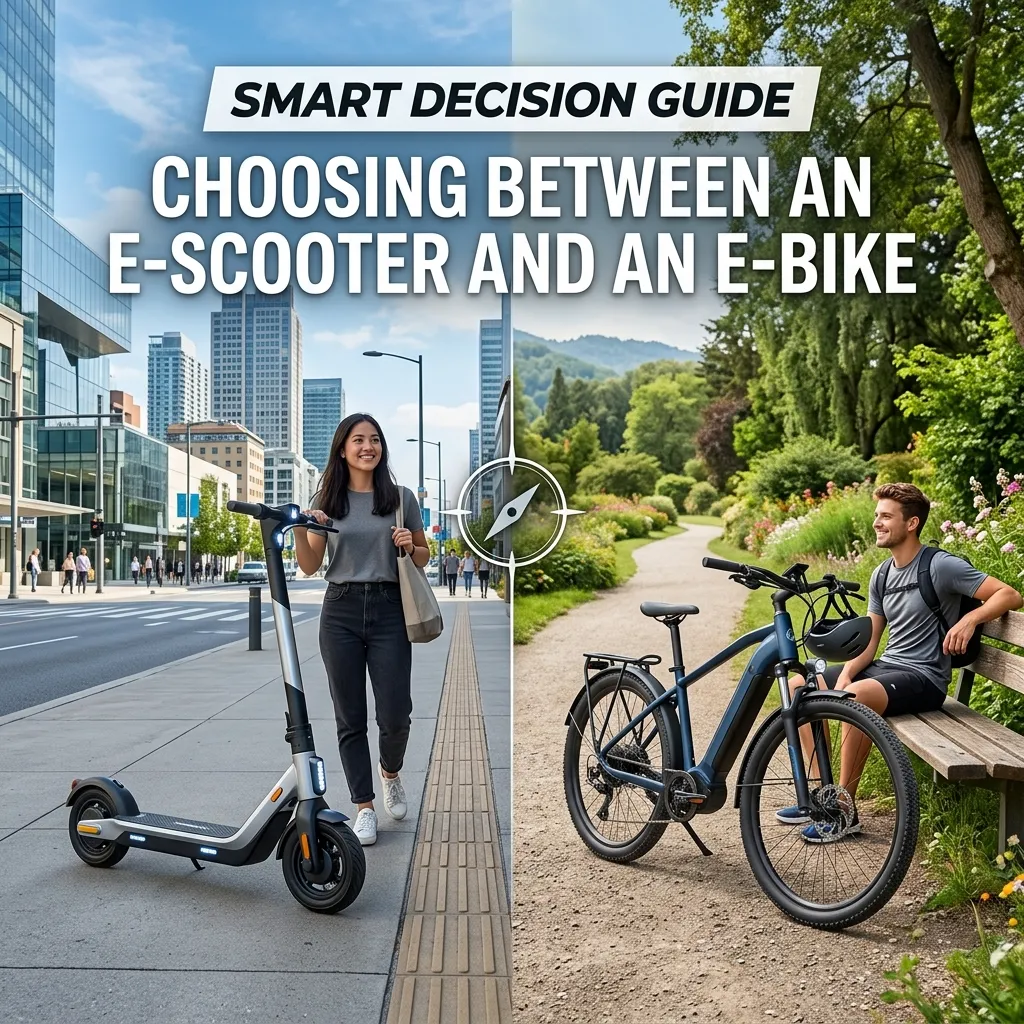
Choosing the right electric ride depends on how, where, and how often you travel in your daily urban commute. Instead of focusing only on features, it is more practical to match each vehicle to your lifestyle needs, travel distance, and environment. The points below will help you quickly identify which option fits you best.
- Choose an e-scooter if you need short-distance convenience:
E-scooters are ideal for quick trips under 5–10 miles, such as commuting to a nearby station, running errands, or navigating dense city centers where parking and space are limited. - Choose an e-bike if you travel longer distances daily:
If your urban commute exceeds 10–15 miles or includes hills and extended bike lanes, an e-bike provides better endurance, comfort, and speed consistency. - Prioritize portability if you use mixed transport:
E-scooters are easier to carry on buses, trains, or office elevators due to their lightweight and foldable design, making them perfect for multi-modal commuters. - Prioritize comfort and stability for daily riding:
E-bikes offer a seated riding position, larger wheels, and better suspension, which reduce fatigue and improve safety on uneven roads. - Consider cargo needs before deciding:
If you need to carry groceries, a backpack, or work equipment, e-bikes with racks and panniers are far more practical than e-scooters. - Think about long-term riding comfort:
For frequent, long-duration rides, e-bikes provide less physical strain compared to standing on a scooter for extended periods. - Factor in weather and road conditions:
E-bikes perform better in rain, rough roads, and windy conditions due to their stronger build and wheel stability, while scooters are better suited for dry, smooth surfaces. - Match your choice with budget and maintenance expectations:
E-scooters are cheaper upfront and easier to maintain, while e-bikes cost more but offer greater durability and long-term value.
By evaluating your daily urban commute through these practical points, you can confidently select the option that delivers the best balance of comfort, efficiency, and convenience for your lifestyle.
FAQ About Electric Transportation
Can I ride my e-scooter on bike lanes?
Rules differ depending on local transport laws. In many cities, e-scooters are allowed in bike lanes to improve safety and traffic flow. However, some areas restrict them to roads or designated scooter tracks only. Always check road signs and municipal guidelines before riding. Following local rules helps avoid fines and ensures safer travel.
How long does it take to charge an e-bike battery?
Most e-bike batteries take around 3 to 6 hours to charge using a standard charger fully. Larger batteries or lower-powered chargers may take longer. Fast chargers can reduce charging time but may increase long-term battery wear if overused. It’s best to follow manufacturer recommendations for charging habits. Proper charging helps extend battery lifespan.
Do I need a special license to ride an e-bike or e-scooter?
In many regions, low-speed e-bikes (Class 1 and Class 2) do not require a license, registration, or insurance. E-scooter regulations vary more widely by location and may include age limits or riding permits. Some cities treat them like bicycles, while others impose stricter rules. Always confirm your local laws before riding. Compliance ensures safe and legal use.
What is the maximum speed of an e-scooter?
Most shared and consumer e-scooters have speed limits between 20 km/h and 25 km/h (about 12–15 mph). Some private models can go faster, but many regions legally cap speeds for safety reasons. Speed limits are often automatically enforced through software restrictions. Riding within legal limits reduces accident risk. Always prioritize control over maximum speed.
How far can an e-bike or e-scooter travel on a single charge?
Range depends on battery size, rider weight, terrain, and speed. On average, e-scooters can travel 15–40 km per charge, while e-bikes may reach 40–120 km. Hilly areas and high-speed riding reduce overall range. Efficient riding habits can significantly extend distance. Always plan trips with charging availability in mind.
Are e-scooters safe to ride in traffic?
E-scooters are generally safe when used responsibly and in appropriate areas. Safety depends on rider behavior, road conditions, and visibility. Wearing a helmet and using lights at night significantly improves safety. Riding in designated lanes is strongly recommended. Defensive riding helps avoid collisions with vehicles and pedestrians.
Can I ride an e-bike in the rain?
Most e-bikes are designed to handle light rain and wet conditions. However, deep water, heavy storms, and flooding should be avoided to protect electrical components. Waterproof ratings vary by model, so checking manufacturer guidelines is important. After riding in rain, drying and maintenance help prevent damage. Careful use ensures long-term durability.
How long does an e-scooter battery last overall?
A typical e-scooter battery lasts around 2 to 4 years depending on usage and charging habits. Frequent deep discharges and improper charging can shorten battery life. Most batteries are rated for several hundred charge cycles. Proper maintenance can extend lifespan significantly. Eventually, battery replacement may be needed to restore full performance.
What safety gear should I use while riding?
A helmet is the most important safety gear for both e-bike and e-scooter riders. Gloves, reflective clothing, and knee or elbow pads add extra protection. Lights and reflectors improve visibility during night rides. Wearing proper footwear also helps maintain control. Good safety gear reduces injury risk in case of accidents.
Can I carry passengers on an e-scooter or e-bike?
Most e-scooters are designed for single riders only and should not carry passengers. Some e-bikes are built with passenger seats or cargo capacity, but this depends on the model. Overloading can reduce stability and increase accident risk. Always check manufacturer guidelines before carrying additional weight. Safe riding requires respecting design limits.
Do e-scooters require regular maintenance?
Yes, basic maintenance is important for safe and efficient performance. Regularly check tire pressure, brakes, lights, and battery condition. Loose parts should be tightened, and software updates should be installed when available. Cleaning the scooter helps prevent dirt-related damage. Routine care extends the lifespan and improves riding safety.
What happens if my e-scooter runs out of battery while riding?
If the battery runs out, the e-scooter will stop providing motor assistance and you’ll need to push it manually. This can be tiring, especially on uphill routes. Planning your route and monitoring battery levels helps avoid this situation. Some models allow regenerative braking, but it won’t fully recharge the battery. Always keep enough charge for your return trip.
Conclusion
Selecting between an e-scooter and an e-bike ultimately depends on individual priorities and commuting patterns in today’s urban commute environment. If you value rapid deployments, compact storage, and short-distance agility, e-scooters provide an excellent solution for quick errands and first-and-last-mile connections. Conversely, if your trip spans multiple miles, involves cargo hauling, or demands consistent assistance on varied terrain, an e-bike delivers superior range, speed, and rider comfort.
Micro-mobility options continue to expand, driven by technological advances and infrastructure improvements. When making your decision, weigh factors such as upfront cost, maintenance requirements, portability constraints, and safety features. Embrace protective gear, stay informed about local regulations, and plan your routes along dedicated lanes for the most efficient, enjoyable ride. Whichever electric vehicle you choose, you will be part of a green mobility revolution reshaping city life for the better.
