



Ride-hailing software connects passengers and drivers through real-time GPS, payments, and matching systems. This guide explains essential features, technology stack, development process, safety tools, and monetization strategies for building a scalable mobility platform successfully designed.
Urban mobility has completely transformed over the last decade. People rarely stand on street corners waving for a taxi anymore. Instead, they tap a screen, input a destination, and wait a few minutes for a car to arrive. Behind this seamless, everyday experience is powerful ride-hailing software that connects passengers with drivers in real time.
Creating a successful mobility platform requires more than just a basic map and a simple payment gateway. Building a reliable application involves careful planning, a robust technology stack, and a deep understanding of user needs. Market leaders have set a high bar for performance, safety, and overall convenience.
This comprehensive guide covers everything you need to know about developing your own ride-hailing software. We will explore the essential features every platform needs, the technologies required to build them, and the most effective ways to monetize your new on-demand transportation service.
Key Features of Successful Ride-Hailing Software Platforms
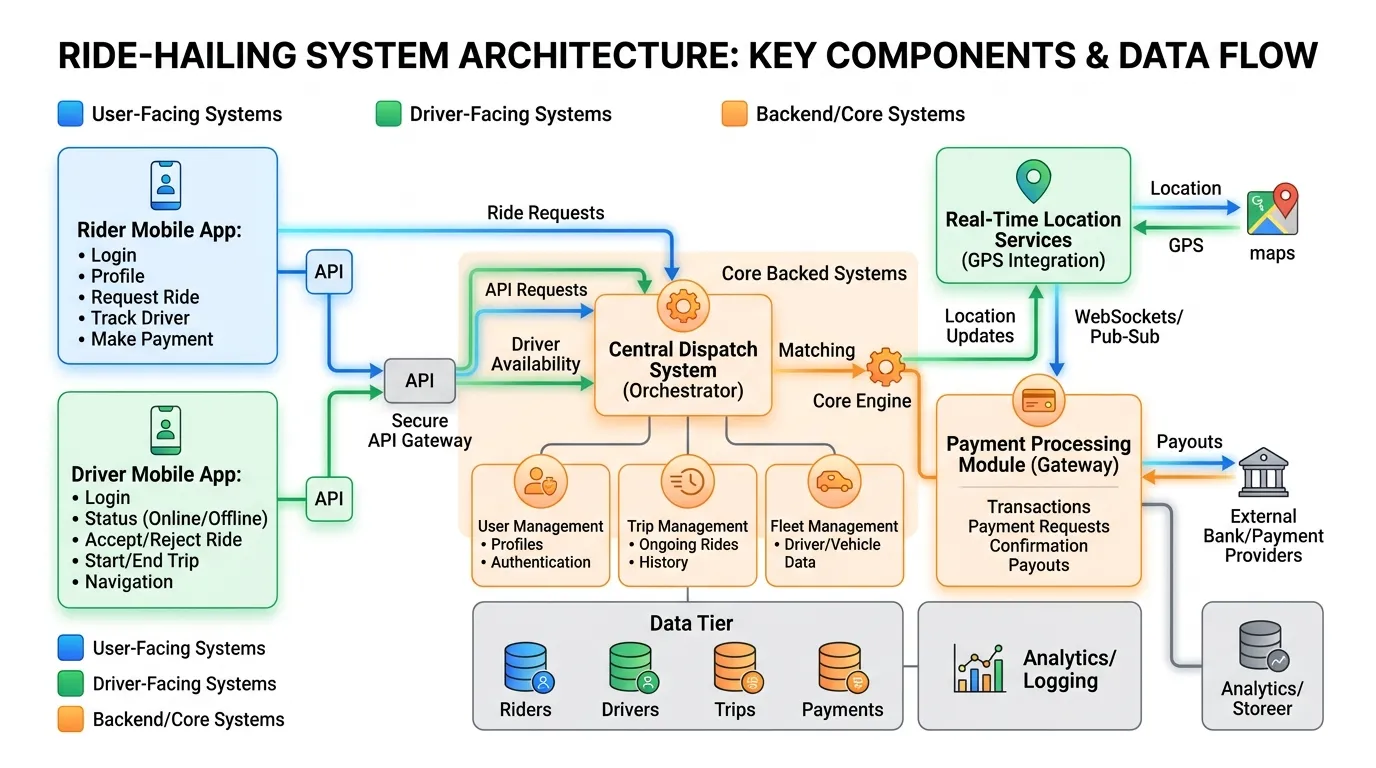
A complete ride-hailing software ecosystem actually consists of three distinct applications working together in perfect harmony. To run a seamless operation, you need an app for the passengers, a dedicated app for the drivers, and a centralized control panel for your business operators.
The User App: Crafting the Passenger Experience
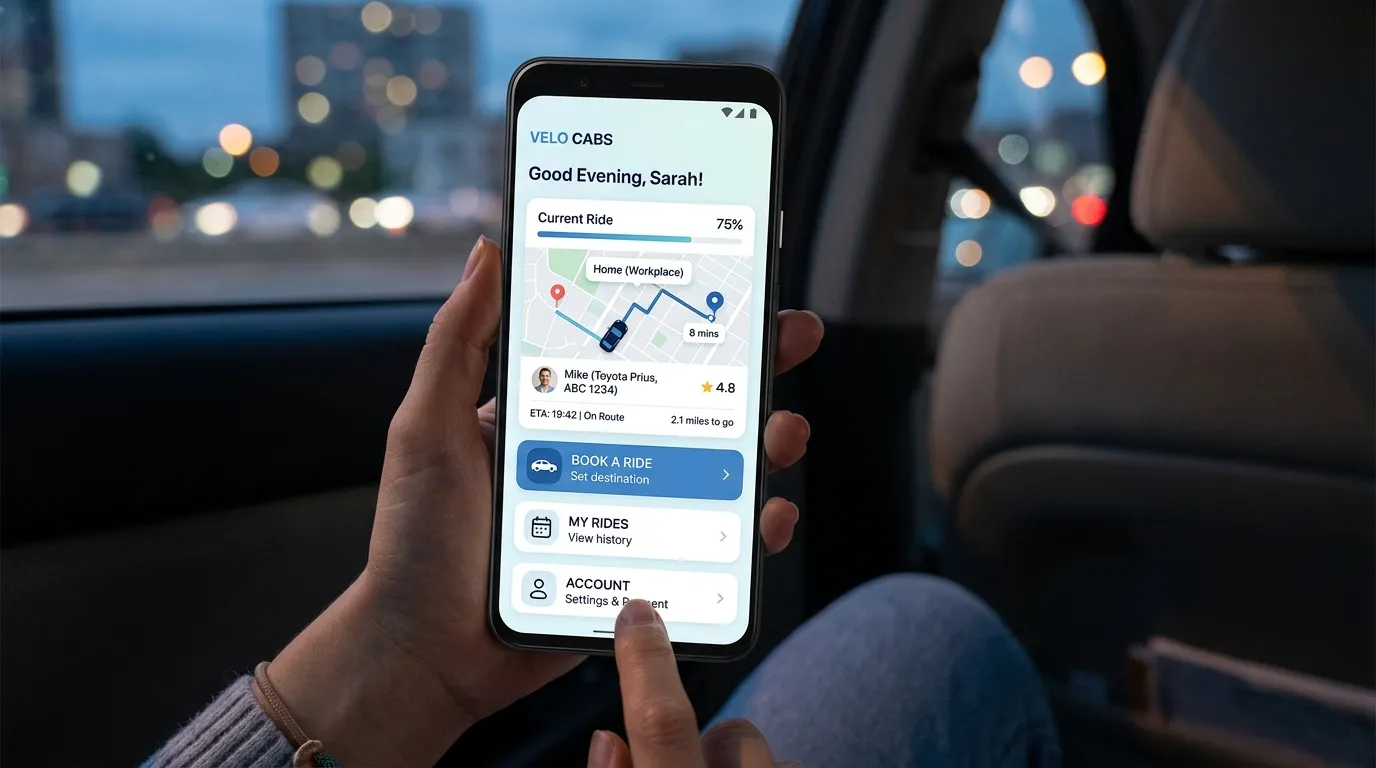
The passenger-facing application of your ride-hailing software must be intuitive, fast, and highly responsive. Users expect to open the ride sharing app and immediately see their current location on an interactive map.
Essential features for the passenger app include:
- Simple, frictionless registration via email or social media.
- Secure payment integration for credit cards and digital wallets.
- A fare estimator to provide upfront pricing before booking.
- Real-time GPS tracking to monitor the driver’s exact location.
- Push notifications for ride acceptance, arrival, and completion.
Prioritizing Passenger Safety
Safety is paramount in any mobility platform. A well-designed ride-hailing system should prioritize passenger and driver protection at every stage of the journey. Essential features include an easily accessible emergency SOS button that allows users to quickly alert authorities or the support team in case of danger. Alongside this, a trip-sharing option enables passengers to share real-time ride details with trusted contacts, ensuring someone always knows their location and route.
Clear driver identification is also crucial for building trust. Verified profiles with photos, vehicle details, license information, and trip history help users feel more secure before entering the vehicle. When passengers can confidently confirm who is picking them up, the overall experience becomes significantly safer and more reliable.
In addition, a strong rating and review system plays a key role in maintaining service quality. By allowing both riders and drivers to rate each other, platforms can encourage responsible behavior and quickly identify any issues. This feedback loop not only improves accountability but also strengthens trust within the entire community.
Ultimately, combining real-time safety tools with transparent identity verification and user feedback creates a more secure, dependable, and user-friendly ride-hailing experience.
The Driver App: Ensuring Efficiency on the Road

Drivers need a completely different set of tools within the ride-hailing software. Their interface must prioritize safety and minimize digital distractions while they are operating a vehicle.
Core features of a driver booking system include an easy toggle for active or inactive status and real-time ride request alerts with clear pickup locations. Once a driver accepts a ride, the app must provide highly accurate, turn-by-turn navigation optimized for current traffic conditions.
Empowering Driver Earnings
A successful mobility platform keeps its drivers happy. An integrated earnings dashboard allows drivers to track their daily, weekly, and monthly income effortlessly. It should break down earnings by base fare, tips, and surge pricing bonuses, ensuring complete transparency.
The Admin Panel: Centralized Business Control
Your operations team requires a comprehensive web-based dashboard to manage the entire ride-hailing software ecosystem. The admin panel provides a bird’s-eye view of all active rides, registered users, and live driver statuses.
It handles critical backend operations such as dispute resolution, refund processing, and driver background check verifications. Advanced analytics and reporting tools are also crucial here, allowing managers to identify peak hours, monitor high-demand areas, and adjust marketing strategies accordingly.
Technology Stack for Developing Ride-Hailing Software
Choosing the right technology stack is a critical decision that directly impacts how smoothly your application can scale as your user base grows. Ride-hailing platforms, in particular, demand a highly optimized and resilient architecture because they handle real-time operations at a massive scale.
At any given moment, the system must process thousands of live location updates from drivers, continuously calculate distances, and instantly match passengers with the nearest available rides. This requires high-performance backend servers, efficient load balancing, and low-latency communication systems to ensure users experience minimal delay.
As demand increases, the infrastructure must be able to scale horizontally, meaning additional servers can be added without disrupting performance. Technologies such as distributed databases, caching systems, and real-time data processing frameworks are often used to maintain speed and reliability under heavy traffic.
In addition, the choice of programming languages, APIs, and cloud services plays a major role in system stability. A well-planned tech stack not only improves performance but also reduces downtime, enhances user experience, and ensures the platform remains responsive even during peak hours.
Backend Infrastructure
For the backend infrastructure, developers often rely on Node.js, Python, or Ruby on Rails. These environments handle asynchronous requests efficiently, which is absolutely vital for real-time matchmaking between drivers and passengers in your ride-hailing software. Cloud hosting via Amazon Web Services (AWS) or Google Cloud ensures maximum uptime, while databases like PostgreSQL and MongoDB securely store vast amounts of user data.
Mobile App Development
Mobile app development usually takes one of two paths. You can build native applications using Swift for iOS and Kotlin for Android, offering the best possible performance and deepest hardware integration. Alternatively, frameworks like React Native or Flutter allow developers to write a single codebase that works on both operating systems, significantly reducing the initial development time and costs for your ride-hailing software.
Mapping, Geolocation, and Payments
Mapping and geolocation are the lifeblood of any on-demand transportation app. Google Maps API and Mapbox are the industry standards for calculating complex distances, estimating precise arrival times, and providing dynamic navigation. For payment processing, secure integrations with Stripe, PayPal, or Braintree allow you to handle multiple currencies and payment methods safely and reliably.
Specialized Services and Professional Booking Solutions
While standard ride-hailing software focuses on getting users from point A to point B quickly, there is a massive market for premium, pre-planned transit. Targeting corporate clients and luxury travelers requires advanced scheduling tools and a highly polished interface.
For companies looking to offer premium fleet management alongside standard on-demand transit, specialized tools are required. You can upgrade your operations by integrating chauffeur service booking software into your business model.
Standard vs. Premium Ride-Hailing Software Comparison
|
Feature |
Standard Ride-Hailing Software |
Premium Driver Booking System |
|---|---|---|
|
Booking Window |
Immediate, on-demand |
Scheduled days or weeks in advance |
|
Vehicle Options |
General categories (Standard, XL) |
Specific make, model, and color selection |
|
Pricing Model |
Dynamic, surge-based |
Fixed, transparent hourly or distance rates |
|
Driver Status |
Independent gig workers |
Professional, licensed chauffeurs |
|
Target Audience |
Daily commuters, casual riders |
Corporate executives, luxury travelers |
Steps to Build Your Own Ride-Hailing Application
Conduct Thorough Market Research
First, conduct thorough market research. Identify a specific niche or geographic location where current ride-hailing services fall short. You might focus entirely on luxury vehicles, zero-emission electric cars, or serving a specific suburban area that larger competitors ignore.
Focus on UI/UX Design and MVP
Next, focus intensely on UI/UX design. Create wireframes and prototypes that map out the entire user journey. The goal is to minimize the number of taps required to book a ride. Once the design is approved, development begins. Start by building a Minimum Viable Product (MVP). An MVP includes only the core features necessary to facilitate a ride, allowing you to launch faster and gather vital user feedback.
Testing, QA, and Marketing Launch
Testing and quality assurance (QA) strictly follow development. QA engineers must test the ride-hailing software across dozens of different devices and network conditions. They look for battery drain issues, GPS inaccuracies, and payment failures. Finally, you can launch the app and execute your marketing strategy. Offer promotional codes to first-time riders and sign-up bonuses to build your initial driver base.
Monetization Strategies in the Ride-Hailing Industry
Generating sustainable revenue from ride-hailing software requires a carefully balanced approach. The goal is to ensure the platform earns enough to cover operational costs, support growth, and invest in technology improvements, while still keeping fares affordable and competitive for users. If pricing becomes too high, users may switch to alternatives; if it is too low, the business may struggle to maintain quality and scalability.
Most ride-hailing platforms use a combination of revenue models rather than relying on a single source. The most common is a commission-based model, where the platform takes a percentage from each completed ride. This scales naturally with usage, making it effective for long-term growth. Some platforms also use dynamic pricing or surge pricing during peak demand, which helps balance supply and demand while increasing revenue during high-traffic periods.
Additional income streams can include driver subscription plans, where drivers pay a fixed fee for access to the platform, and service fees charged to riders for app maintenance and support. Some companies also explore partnerships, in-app advertisements, and corporate ride solutions as extra revenue channels.
A sustainable strategy focuses not just on maximizing profit, but on maintaining equilibrium—ensuring drivers earn fairly, riders get reasonable prices, and the platform remains financially healthy. When executed properly, this balance builds long-term trust, user retention, and steady business growth.
Commission Fees and Surge Pricing
The most common strategy is charging a commission fee on every completed ride. The ride-hailing software typically takes a percentage of the total fare, while the driver keeps the rest. Surge pricing is another vital revenue stream. During peak hours, bad weather, or special events, the algorithm automatically increases fares, encouraging more drivers to get on the road to meet high demand.
Premium Categories and In-App Advertising
You can also offer premium ride categories within your mobility platform. Allowing users to book larger SUVs, luxury sedans, or wheelchair-accessible vehicles at a higher price point increases your average order value. Some platforms even incorporate in-app advertising, partnering with local restaurants or hotels to display targeted promotions to passengers during their trip.
Challenges and Future Trends in Urban Mobility
The ride-hailing industry is highly competitive and heavily regulated. Startups frequently face legal hurdles regarding driver classification and local taxi licensing laws. Driver retention is another ongoing challenge, as many workers switch between multiple apps.
Despite these challenges, the future of urban mobility is incredibly promising. Electric vehicles (EVs) are becoming the standard within modern ride-hailing software. Autonomous vehicles are also on the horizon, which could eventually eliminate driver costs entirely. By focusing on a seamless user experience and a scalable technology stack, you can create ride-hailing software that stands out in a crowded market.
Frequently Asked Questions
What exactly is ride-hailing software?
Ride-hailing software is a digital platform that connects passengers needing transportation with drivers willing to provide it. It uses GPS technology, real-time data processing, and mobile applications to facilitate seamless on-demand transit. This software manages the entire booking, tracking, and payment process.
How much does it cost to build a ride-sharing app?
The cost of developing ride-hailing software varies wildly depending on feature complexity and development location. A basic MVP might start around $40,000, while a fully featured, multi-platform ecosystem can easily exceed $150,000. Investing in high-quality architecture early prevents expensive rebuilds later.
Which technology stack is best for a driver booking system?
A robust technology stack for a driver booking system typically includes Node.js or Python for a fast, responsive backend. Mobile apps are often built with native languages like Swift or cross-platform tools like Flutter. Reliable third-party APIs handle mapping and secure payment processing.
How does surge pricing work in ride-hailing software?
Surge pricing is an automated feature within ride-hailing software that dynamically increases fares when passenger demand outpaces driver supply. This financial incentive encourages more drivers to log into the mobility platform and head to busy areas. It helps balance the marketplace during peak times.
How do I know which mobility platform has the best rates?
Fares fluctuate constantly based on local demand, traffic, and platform algorithms. If you want to know Uber is cheaper for your next ride, it is always best to open both apps simultaneously to compare real-time estimates. Competition between platforms often results in dynamic pricing shifts.
Why do I need separate apps for riders and drivers?
Building separate interfaces is crucial because passengers and drivers have completely different needs from the ride-hailing software. Passengers need a clean interface for booking and payment, while drivers require navigation, ride acceptance tools, and earnings trackers. Combining them causes severe UI clutter.
What safety features are essential for on-demand transportation?
Safety is non-negotiable for any on-demand transportation service. Your ride-hailing software must include real-time GPS tracking, driver background check integrations, and an in-app SOS button. Call masking is also essential so that personal phone numbers remain private during communication.
Can I launch a ride sharing app in a small town?
Yes, launching a ride sharing app in a smaller, underserved market is often a brilliant strategy. You face significantly less corporate competition and can tailor your ride-hailing software to the specific transportation needs of that local community. Hyper-local marketing is highly effective here.
How do drivers get paid through the software?
Ride-hailing software integrates seamlessly with secure payment gateways like Stripe or PayPal. When a ride ends, the software automatically charges the passenger’s saved card, deducts the platform’s commission fee, and routes the remaining funds to the driver’s digital wallet or bank account.
Will autonomous vehicles replace traditional ride-hailing software?
Autonomous vehicles will not replace ride-hailing software; instead, they will deeply integrate with it. The mobility platform will still be required to route the self-driving cars, manage user accounts, and process payments. The software remains the central brain of the transportation ecosystem.
