


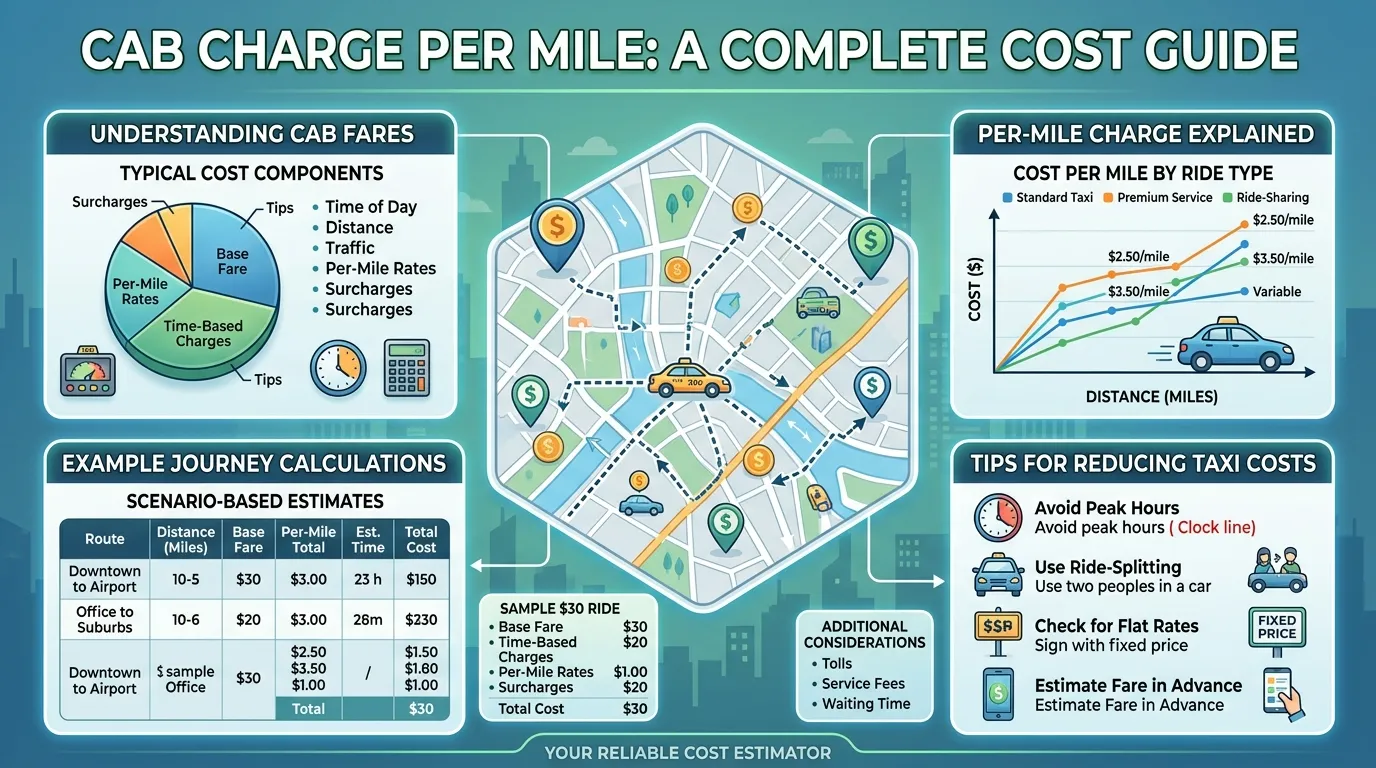
Understanding cab charge per mile helps riders decode taxi fares, including base fees, distance, time charges, and surcharges. It also compares rideshare pricing and offers practical tips to reduce transportation costs effectively for better savings.
You hop in a taxi, watch the meter tick, and step out wondering why the number landed so high. Most riders never break down what they actually pay for distance, time, and extras. Once you understand the cab charge per mile, those mystery totals start to make sense.
This guide explains exactly how a cab charge per mile works, what pushes your taxi fare up or down, and how rideshare pricing stacks up against traditional cabs. You’ll get clear numbers, a handy comparison table, and practical tips to keep your transportation costs under control.
Here’s what we’ll cover:
- How the cab charge per mile is calculated
- The hidden fees that inflate your final taxi fare
- How rideshare pricing compares to a classic cab fare
- Smart ways to lower your transportation costs
- Answers to the questions riders ask most
Let’s start with the basics.
What Does Cab Charge Per Mile Actually Mean?
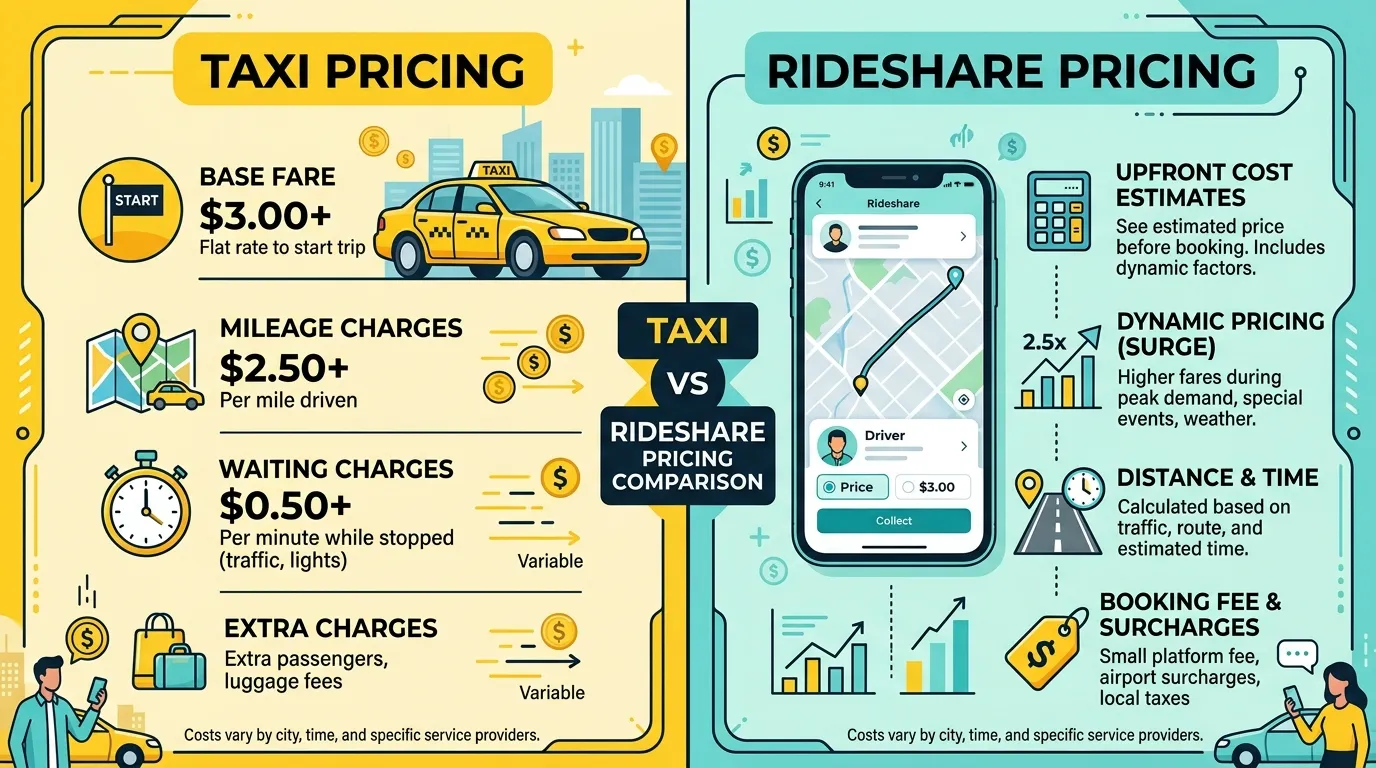
The cab charge per mile is the rate a taxi company bills for each mile you travel. It’s the core of any metered fare, and it usually sits between $2 and $4 per mile in most U.S. cities. That single number, though, only tells part of the story.
A complete taxi fare blends several charges together. The per-mile rate covers distance, but you also pay a base fee, a per-minute charge for slow traffic, and possible surcharges. Knowing how these pieces fit together helps you predict your cab fare before the meter starts running.
The Building Blocks of a Taxi Fare
Every metered cab fare combines a few standard components. Understanding each one shows you exactly where your money goes.
- Base fare (flag drop): A flat fee charged the moment your ride begins, often $2.50 to $4.
- Per-mile rate: The cab charge per mile that applies once the cab is moving at speed.
- Per-minute rate: A time charge that kicks in during slow traffic or stops.
- Surcharges: Extra fees for airports, late nights, extra passengers, or tolls.
Add these together and you get your total taxi fare. The per-mile rate usually dominates on long trips, while the base fare and time charges matter more on short, slow rides.
Why the Per-Mile Rate Matters Most
On a typical trip, distance drives the biggest chunk of your cab fare. A 10-mile ride at $3 per mile already costs $30 before you add the base fee or any surcharges. That’s why the cab charge per mile is the number most riders care about.
Still, the per-mile rate isn’t fixed everywhere. It shifts by city, by company, and sometimes by the time of day. A cab in a small town may charge $2 per mile, while a ride in a major metro can run $4 or more.
Quick recap: The cab charge per mile is the distance rate, but your full taxi fare also includes a base fee, time charges, and surcharges.
How Cab Charge Per Mile Is Calculated
Taxi meters do the math for you, but the formula behind them is simple once you see it. Knowing how the meter works helps you spot a fair fare from an inflated one.
The meter starts with the base fare the moment you sit down. Then it switches between two modes: it charges the cab charge per mile when the car moves above a set speed, and it charges a per-minute rate when the car slows or stops. At the end, it adds any surcharges.
The Standard Fare Formula
Most metered cab fare follows this pattern:
Total fare = Base fare + (Miles × Per-mile rate) + (Minutes × Per-minute rate) + Surcharges
Let’s run a quick example. Say your city charges a $3 base fare, $2.75 per mile, and $0.50 per minute. You travel 8 miles in 20 minutes:
- Base fare: $3.00
- Distance: 8 × $2.75 = $22.00
- Time: 20 × $0.50 = $10.00
- Total taxi fare: $35.00
That single ride shows how time charges can rival the cab charge per mile, especially in stop-and-go traffic.
Distance Mode vs. Time Mode
Taxi meters don’t charge for distance and time at the same moment. They switch between the two based on speed.
- Distance mode: When the cab travels above a threshold (often around 11 mph), the meter bills the per-mile rate.
- Time mode: When the cab drops below that speed, the meter bills the per-minute rate instead.
This switch explains why heavy traffic raises your cab fare even when the distance stays the same. You’re paying for the driver’s time while you crawl along.
A Real-World Traffic Example
Imagine two trips of the same 6 miles. The first happens at 11 p.m. on empty roads and takes 12 minutes. The second happens at 5 p.m. in rush hour and takes 35 minutes.
The distance charge stays identical, but the time charge nearly triples on the second trip. Your cab charge per mile didn’t change—your time in the car did. That difference can add $10 or more to an otherwise identical ride.
Quick recap: Your fare combines base, distance, time, and surcharges, and the meter switches between distance and time modes based on speed.
Factors That Affect Your Cab Charge Per Mile
The cab charge per mile isn’t a single national number. It swings based on several factors. Understanding them helps you anticipate your taxi fare and avoid surprises.
Your City and Local Regulations
Local governments often set or cap taxi rates, so your cab fare depends heavily on where you ride. Dense, high-cost cities allow higher per-mile rates to match local expenses.
A ride in New York City or San Francisco costs noticeably more per mile than the same trip in a mid-sized town. Regulations also dictate base fares, surcharges, and allowable extras, which shapes your final transportation costs.
Time of Day and Demand
Many cab companies and nearly all rideshare services adjust pricing based on demand. Late nights, holidays, and rush hours often carry higher rates or surcharges.
- Night surcharges: Extra fees for rides after a set hour, often 8 p.m. or later.
- Holiday rates: Higher charges on major holidays.
- Peak demand: Rideshare pricing surges when many riders compete for few cars.
These add-ons can quietly raise your effective cab charge per mile well above the posted rate.
Traffic and Route Conditions
As you saw earlier, slow traffic shifts the meter into time mode and inflates your fare. Construction, accidents, and detours all extend your trip and your cost.
A direct route keeps your taxi fare predictable. A congested or roundabout path raises both the distance and the time you pay for. Picking off-peak travel times is one of the easiest ways to control transportation costs.
Extra Passengers and Luggage
Some cabs charge per additional passenger or for bulky luggage. Airport trips often carry their own surcharge on top of the standard cab fare.
These extras rarely cost much individually, but they add up. Always ask about surcharges before a ride if you’re traveling with a group or heavy bags.
Tolls and Airport Fees
Bridges, tunnels, and toll roads pass their cost straight to you. Airport pickups frequently include an access fee that the city or airport requires.
These charges sit outside the cab charge per mile entirely, yet they land on your final bill. Factor them in when you estimate a trip to or from a transit hub.
Cab Charge Per Mile vs. Rideshare Pricing
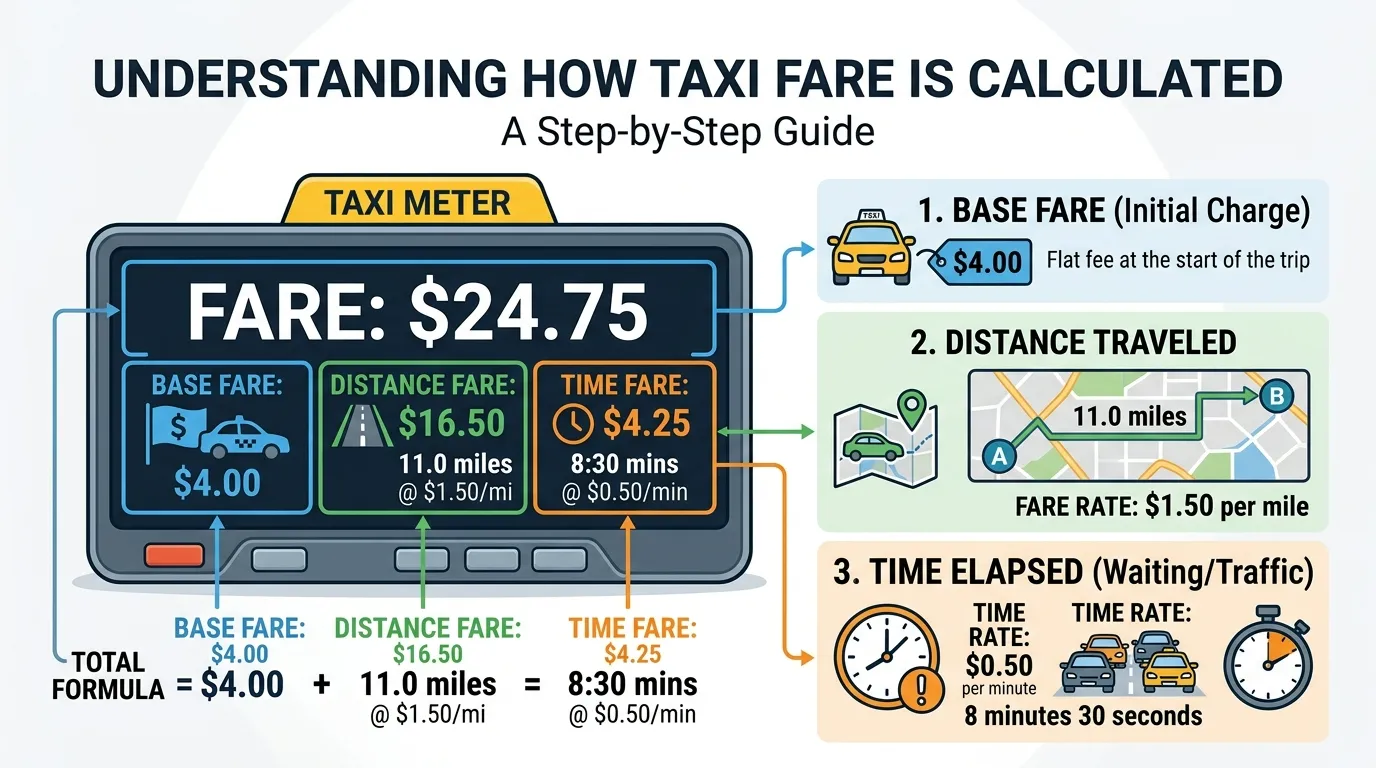
Riders often wonder whether a traditional cab or a rideshare app saves more money. The answer depends on the trip. Each pricing model has strengths and weaknesses.
How Traditional Taxi Fare Works
Traditional taxi fare relies on a regulated meter. The rates stay consistent and predictable because the city sets them. You know roughly what a ride costs before you board.
This predictability is a real advantage. A cab fare won’t suddenly double because of demand. The trade-off is that taxis can cost more during slow, low-demand hours when a rideshare might be cheaper.
How Rideshare Pricing Works
Rideshare pricing uses dynamic algorithms instead of a fixed meter. Apps calculate a fare based on distance, estimated time, current demand, and your specific route.
The big variable is surge pricing. When demand spikes, rideshare pricing climbs fast—sometimes two or three times the normal rate. During calm periods, though, a rideshare often beats a metered cab on price.
Side-by-Side Comparison
The table below compares the two models across the factors that affect your transportation costs.
|
Factor |
Traditional Taxi |
Rideshare |
|---|---|---|
|
Pricing model |
Regulated meter (fixed rates) |
Dynamic algorithm |
|
Cab charge per mile |
$2–$4, set by city |
Varies, often $1–$2 base distance rate |
|
Price predictability |
High |
Low during surge |
|
Surge pricing |
Rare or none |
Common at peak times |
|
Upfront price |
Shown after the ride |
Shown before booking |
|
Best for |
Predictable, regulated trips |
Off-peak, app-based convenience |
Neither option wins every time. For a late-night ride during low demand, a rideshare often costs less. During a surge, a metered cab fare may be the cheaper, steadier choice.
Which One Saves You More?
The smart move is to compare both before you ride. Check a rideshare app’s quoted price, then estimate the metered cab fare using local rates. Pick whichever fits your budget and timing.
For frequent travelers, the difference adds up over a month. Tracking your transportation costs across both options reveals patterns you can use to save consistently.
Quick recap: Taxis offer predictable regulated rates, while rideshare pricing flexes with demand—so the cheaper option depends on your timing.
Understanding Transportation Costs Beyond the Meter
Your cab fare is only one slice of your overall transportation budget. To manage spending well, it helps to see the bigger picture of what you pay to get around.
Transportation costs include far more than a single ride. They cover commuting, occasional trips, tips, surcharges, and the choices you make between cabs, rideshares, and public transit. Tracking these expenses gives you control over a budget category most people ignore.
Why Tracking Matters
Many riders underestimate how much they spend on getting around. A few cab rides a week quietly grow into a major monthly expense. Writing them down—or letting an app do it—reveals the true total.
Once you see the full number, you can make smarter choices. Maybe a transit pass beats daily cabs, or maybe off-peak rides cut your spending in half. Awareness is the first step to savings.
Learning the Bigger Financial Picture
Understanding transportation costs ties into broader personal finance. Categorizing these expenses helps with budgeting, tax planning, and even business deductions for work travel.
If you want a clear breakdown of what counts as a transportation expense.
Building Transportation Into Your Budget
Treat getting around as its own line item. Estimate your typical monthly cab fare, rideshare spending, and transit costs, then set a realistic limit.
A simple budget keeps surprises in check. When you know your ceiling, a single high-surge ride won’t derail your finances—you’ll just adjust elsewhere for the month.
Quick recap: Your true transportation costs reach beyond one cab charge per mile, so tracking and budgeting them protects your wallet.
How to Lower Your Cab Charge Per Mile and Save
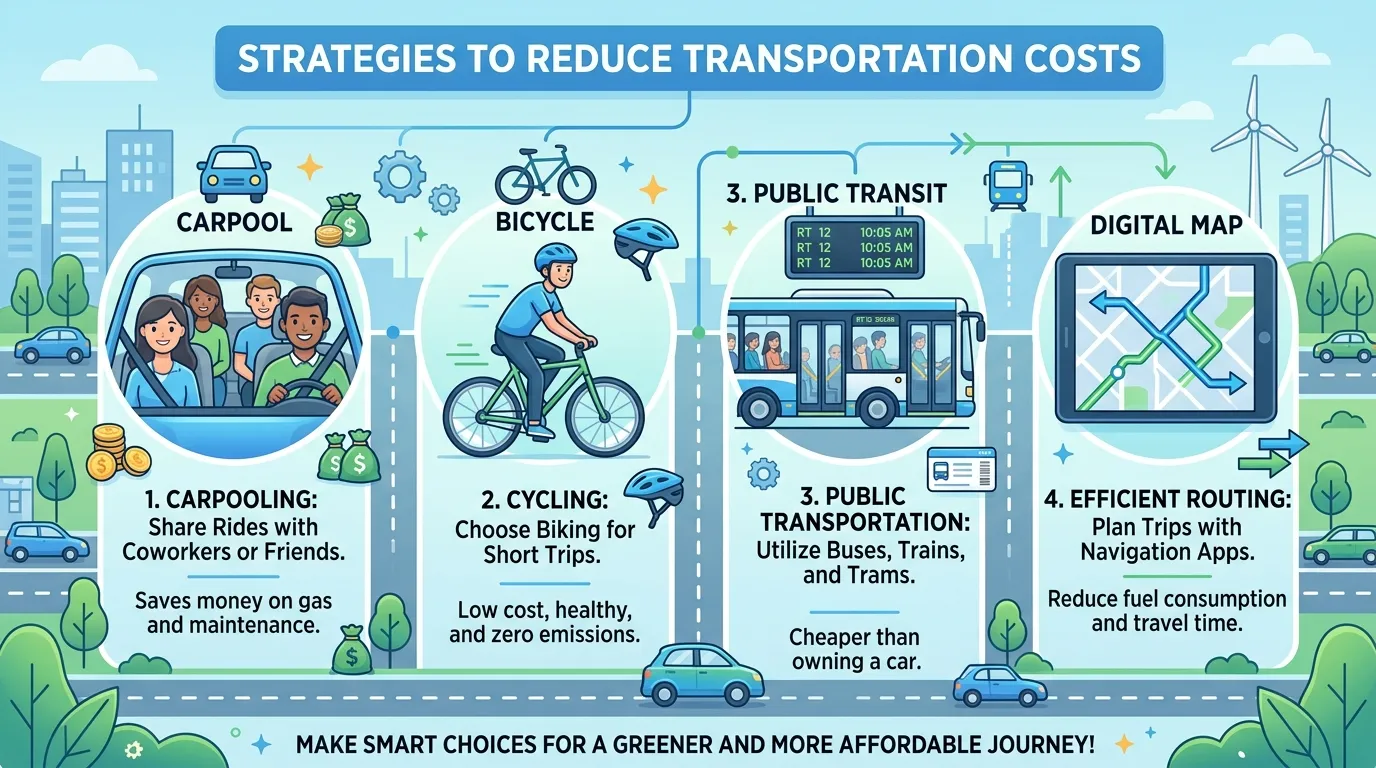
You can’t control the posted rate, but you can control how and when you ride. These practical tips help shrink your taxi fare and overall transportation costs.
Ride During Off-Peak Hours
Demand drives surcharges and surge pricing. Riding outside rush hours, holidays, and late nights keeps your cab charge per mile closer to the base rate.
When possible, shift your trips to mid-morning or early afternoon. Roads move faster, the meter spends less time in pricey time mode, and you avoid peak surcharges.
Compare Cabs and Rideshares First
Never assume one option is always cheaper. Pull up a rideshare quote and compare it to the expected metered cab fare for your route.
- Check the app’s upfront price
- Estimate the cab fare using local per-mile rates
- Factor in surge multipliers or night surcharges
- Choose the lower total
This quick habit saves real money over time, especially for regular riders.
Choose Direct Routes
A longer route means more miles and more time on the meter. Know your route, and speak up politely if a driver takes an unexpected detour.
Using a map app to follow along keeps everyone honest. A direct path protects you from both inflated distance charges and extra time-mode billing.
Split Rides With Others
Sharing a cab or rideshare splits the cab fare across several people. For group outings, this cuts each person’s transportation costs dramatically.
Many rideshare apps also offer shared-ride options at a discount. You trade a little extra travel time for a noticeably lower fare.
Watch for Hidden Surcharges
Airport fees, toll pass-throughs, and extra-passenger charges all inflate your bill. Ask about them upfront so nothing surprises you at the end.
Knowing these fees in advance lets you plan around them. Sometimes a slightly different pickup point avoids an airport surcharge entirely.
Quick recap: Off-peak timing, comparison shopping, direct routes, shared rides, and surcharge awareness all trim your cab charge per mile.
Common Mistakes Riders Make With Cab Fare
Even savvy riders slip up. Avoiding these common errors keeps your transportation costs lower and your rides smoother.
Ignoring the Meter
Some riders never glance at the meter until the ride ends. By then, it’s too late to question a charge. Watch the meter as you go so you understand how your cab fare builds.
Assuming Rideshare Is Always Cheaper
Rideshare pricing isn’t automatically the bargain. During surges, a regulated cab fare often costs far less. Compare both before every important trip rather than defaulting to one.
Forgetting About Surcharges
Riders often budget for the cab charge per mile but forget night fees, airport fees, and tolls. These extras can add 20% or more to your total. Always account for them.
Taking Indirect Routes
Not knowing your route opens the door to longer trips and higher fares. A quick map check protects you from unnecessary miles and time charges.
Not Tracking Spending
Without tracking, transportation costs hide in plain sight. Log your rides, even casually, so you can spot patterns and trim waste over time.
Quick recap: Watch the meter, compare options, plan for surcharges, know your route, and track your spending.
Frequently Asked Questions
What is the average cab charge per mile in the U.S.?
The average cab charge per mile in the U.S. typically falls between $2 and $4. Larger, high-cost cities sit at the upper end, while smaller towns charge less. Your total taxi fare also includes a base fee, time charges, and surcharges. Always check local rates before you ride to estimate accurately.
How is taxi fare calculated?
Taxi fare combines a base fare, a per-mile rate, a per-minute rate, and any surcharges. The meter charges for distance when moving fast and for time when traffic slows. These pieces add together for your total. Knowing the formula helps you predict your cab fare before you board.
Why does my cab fare increase in traffic?
In slow traffic, the meter switches from distance mode to time mode and charges a per-minute rate. So even when the distance stays the same, your cab fare climbs. Heavy congestion can add several dollars to a short trip. Riding during off-peak hours helps you avoid these time charges.
Is rideshare pricing cheaper than a traditional cab fare?
It depends on timing and demand. During calm, off-peak periods, rideshare pricing often beats a metered cab fare. During surges or peak hours, a regulated taxi can cost far less. The smart move is to compare both quotes before every trip.
What is surge pricing in rideshare apps?
Surge pricing is a temporary rate increase that kicks in when demand outpaces available drivers. During surges, rideshare pricing can double or triple the normal fare. It commonly happens during rush hour, bad weather, and major events. Waiting a few minutes can sometimes drop the price back down.
Do cab charges include tips?
Most metered cab fare does not include a tip automatically. Riders typically add 15% to 20% on top of the total. Some payment systems suggest tip amounts at checkout. Always factor a tip into your overall transportation costs when budgeting a ride.
What extra surcharges might appear on my taxi fare?
Common surcharges include night fees, holiday rates, airport access fees, tolls, and charges for extra passengers or luggage. These sit outside the cab charge per mile but still land on your bill. They can add 20% or more to your total. Ask about them upfront to avoid surprises.
How can I lower my transportation costs?
Ride during off-peak hours, compare cabs and rideshares, and choose direct routes. Splitting fares with others and watching for hidden surcharges also help. Tracking your spending reveals patterns you can trim. Small, consistent habits cut your transportation costs over time.
Does the cab charge per mile change by city?
Yes, the cab charge per mile varies widely by location. Local governments often regulate or cap taxi rates, so dense, expensive cities charge more. Base fares and surcharges differ too. Always check the posted local rate before estimating your taxi fare.
Are taxi rates regulated by the government?
In most U.S. cities, local authorities set or cap taxi rates, including the per-mile charge and base fare. This keeps traditional cab fare predictable and consistent. Rideshare pricing, by contrast, is usually set by the company’s algorithm. Regulation is why a metered cab won’t surge unexpectedly.
Can I deduct cab fare as a transportation expense?
In many cases, work-related travel can qualify as a deductible transportation expense. Personal commuting usually does not qualify, but business trips often do. Keep receipts and records to support any claim. Check current tax rules or a professional for your specific situation.
Is it cheaper to ride at night or during the day?
It depends on the surcharges and traffic. Late-night rides often carry night surcharges, raising your cab fare. Daytime rides during rush hour, however, hit heavy traffic and higher time charges. Mid-morning or early afternoon usually offers the best balance of speed and price.
Final Thoughts
Understanding the cab charge per mile turns a confusing meter into a predictable expense. Once you know how base fares, distance rates, time charges, and surcharges combine, no taxi fare can surprise you.
Your next steps are simple. Learn your local per-mile rate, compare cabs against rideshare pricing before each trip, ride during off-peak hours when you can, and track your spending so your transportation costs stay in check.
Smart riders don’t just accept the fare—they plan for it. Apply these habits on your next ride, and you’ll keep more money in your pocket while getting exactly where you need to go.
