

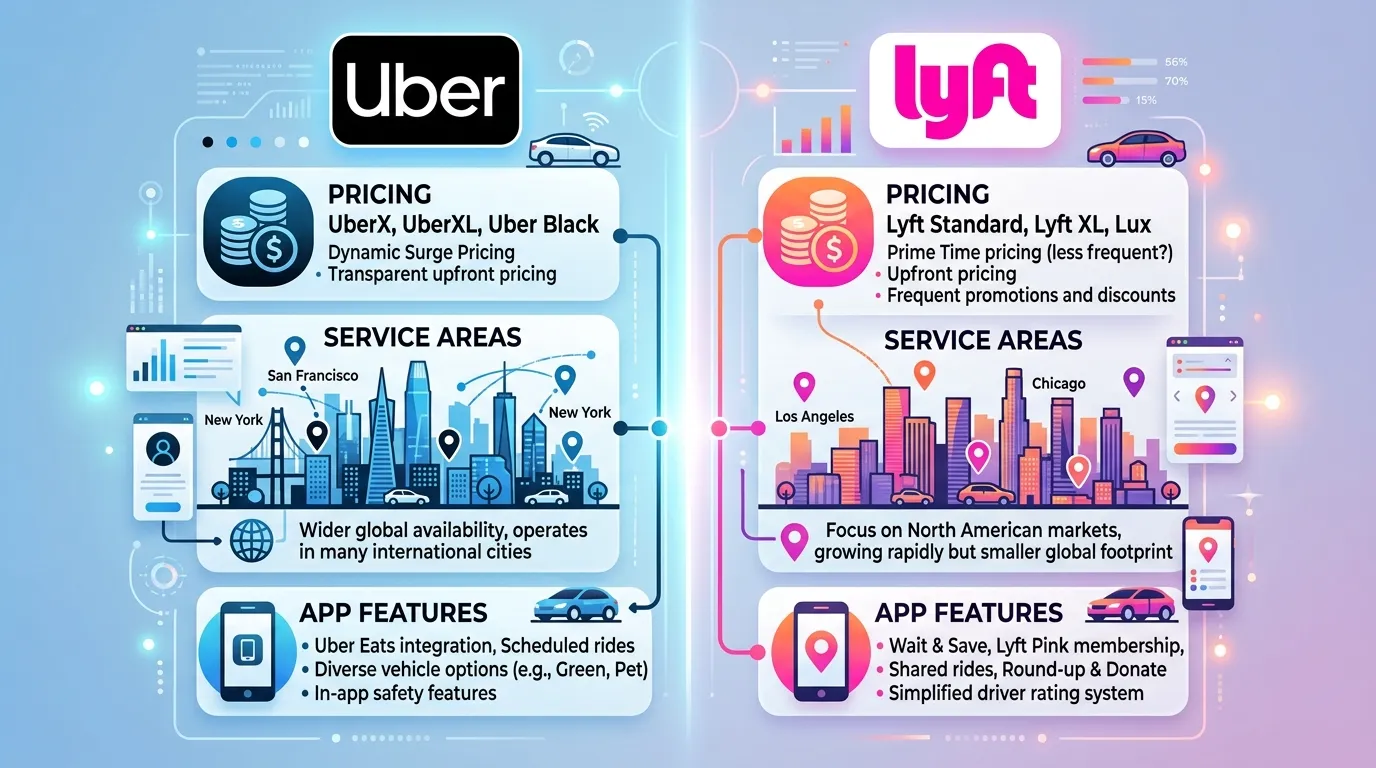
Uber and Lyft are separate rival ride-hailing companies with similar apps but different histories, services, and global reach. Uber is global and diversified, while Lyft focuses on North America and community-centered transportation services.
You pull out your smartphone, open an app, and request a ride. A few minutes later, a driver arrives to take you to your destination. Because the user experience is almost identical, many people ask: are Uber and Lyft the same company?
The short answer is no. Uber and Lyft are entirely separate, fiercely competitive companies. While both disrupted the traditional taxi industry and rely on similar gig-economy models, their origins, corporate structures, and long-term strategies remain uniquely their own. Understanding the differences between these two behemoths helps explain how the modern transportation industry operates.
In this comprehensive guide, we will go far beyond the basics to answer the question: are Uber and Lyft the same company? We’ll detail their histories, business models, revenue streams, brand philosophies, and market impact—with a focus on the nuances that truly set them apart.
Introduction: Are Uber and Lyft the Same Company?
The question “Are Uber and Lyft the same company?” comes up all the time, often because the user experience for riders and drivers can appear nearly identical. Both apps request rides, show a map, offer rating systems, and connect you to a network of drivers. However, their business models, regional focus, and even company cultures diverge in fundamental ways.
Exploring Uber vs Lyft gives us insight not just into the companies themselves, but also into the future of transportation, the gig economy, and the evolution of urban mobility solutions. This transportation apps comparison also highlights the key difference Uber Lyft present to both consumers and investors.
A Tale of Two Startups: Deep Dive into Company Histories
To understand how these two giants evolved into household names, we must examine their early days, vision, and paths to growth.
The Rise of Uber: From Black Cars to Global Dominance
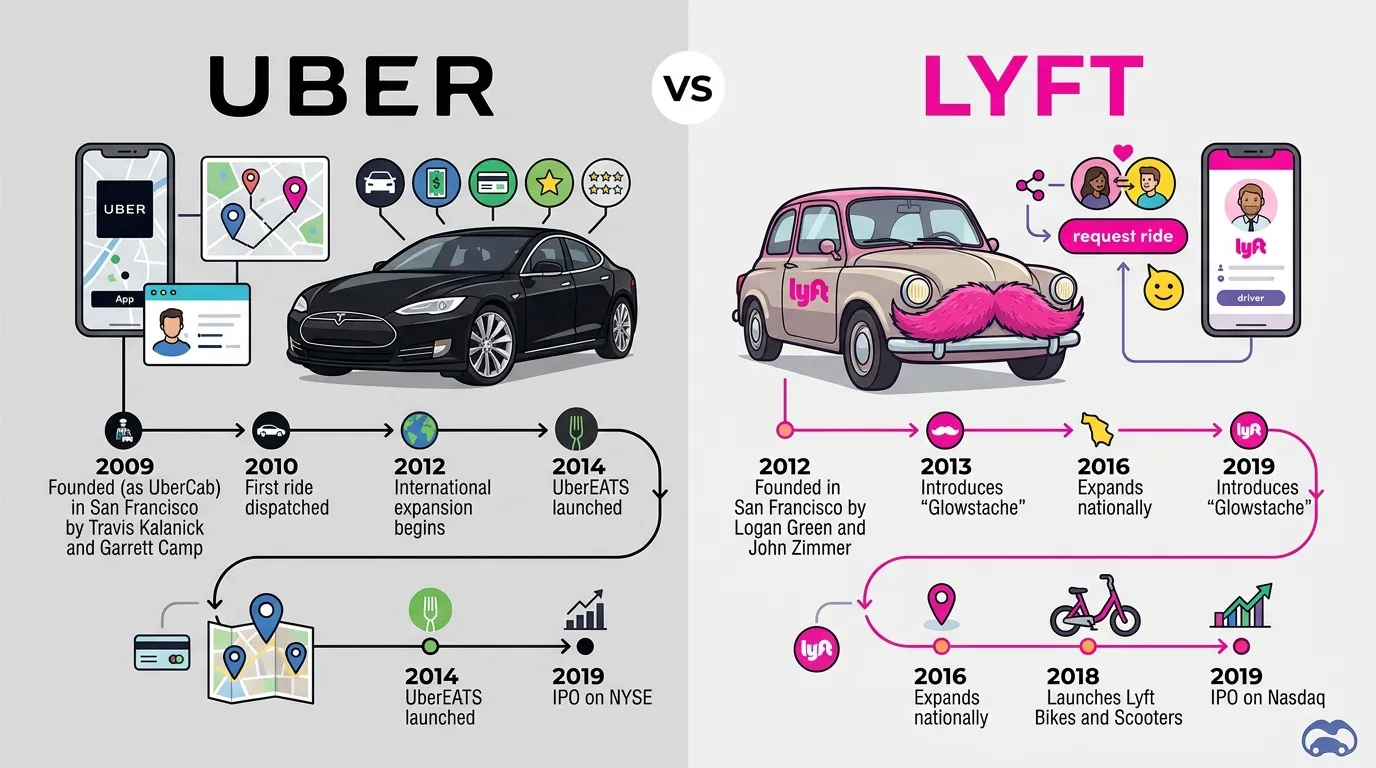
Uber’s meteoric rise began in 2009, in San Francisco—a city synonymous with tech innovation. Travis Kalanick and Garrett Camp launched “UberCab” with the idea of making black car services more accessible to everyday people. The initial offering was a premium point-to-point transportation solution, targeting professionals who desired comfort and style. The main difference Uber Lyft displayed at the outset was Uber’s tight integration with professional drivers and luxury vehicles.
But true disruption arrived in 2012 with the introduction of UberX. By letting everyday people use their own cars, Uber exploded in scale and coverage, triggering an era of rapid expansion throughout the U.S. and beyond. Uber’s willingness to challenge local taxi regulations helped fuel its growth, making it the definition of a modern ride-hailing company. By 2020, Uber was a global juggernaut—operating not only in North America but also in Europe, Asia, Australia, and Africa.
Uber continues to innovate, using vast datasets and proprietary algorithms to maximize efficiency and market reach.
The Origins of Lyft: Community and Carpooling
Lyft’s story is just as compelling but carved from a different philosophy. Originally an offshoot of the carpooling platform Zimride, Lyft’s launch in 2012 emphasized approachability and community. With bright pink mustaches and friendly fist bumps, Lyft drivers differentiated themselves from the more corporate, professional Uber vibe.
The company’s founders, Logan Green and John Zimmer, wanted to build a service that encouraged social connection and made ridesharing feel safe and fun. Lyft focused on urban connectivity—offering innovative solutions such as shared rides (Lyft Line) and integrating micro-mobility from the start.
While early branding leaned quirky and playful, Lyft has since matured, appealing to both urban commuters and more traditional business travelers. Unlike Uber, Lyft has intentionally kept its operational focus tighter, focusing almost exclusively on the US and Canadian markets.
Ownership and Corporate Structure
One of the most common misconceptions when comparing transportation apps is the belief that Uber and Lyft are somehow connected or owned by the same entity.
Independent Public Entities
In reality, the answer to “are Uber and Lyft the same company” could not be clearer. They are entirely independent, publicly traded corporations. Uber Technologies, Inc. (NYSE: UBER) and Lyft, Inc. (NASDAQ: LYFT) each have their own executive boards, shareholders, and governance. This separateness influences everything from product development to their approaches in legal and regulatory battles.
This separation means distinct priorities in fundraising, product launches, and global strategy. Leadership changes, mergers, and acquisitions at one company rarely influence the other, further cementing their independence for investors and consumers alike.
Comparing the Core Services Offered
While both Uber and Lyft are recognized primarily as ride-hailing companies, their suite of services continues to evolve—and diverge—with time.
Ride-Sharing Options
Both platforms offer standard car rides, shared rides, and upgraded options like luxury SUVs. They provide a range of vehicle options for different budgets and group sizes. Dedicated airport options, accessible vehicles, and even hybrid/electric choices are increasingly part of both companies’ fleets.
However, regional availability can vary. While Uber’s expansive network means these options are accessible in hundreds of international cities, Lyft’s services are typically found only in the US and select Canadian cities.
Food Delivery Dominance
Uber Eats was launched in 2014, making Uber as much a food delivery powerhouse as a ride-hailing company. During the COVID-19 pandemic, Uber Eats became essential to Uber’s financial health, helping the brand diversify and capture new markets. Uber Eats offers food, groceries, and even alcoholic beverage delivery in many areas.
Lyft, by contrast, has deliberately avoided entering this market at scale, instead choosing to focus on ride-hailing and micromobility solutions.
Bicycle and Scooter Sharing
Urban mobility looks different today than it did a decade ago, thanks largely to the rise of shared bikes and scooters. Uber partnered with and invested in Lime, a leader in electric micro-mobility, after exiting its own Jump bike initiative. Lyft, meanwhile, owns and operates some of the country’s most recognizable bike-share systems, including Citi Bike in New York and Bay Wheels in San Francisco.
Both companies see last-mile connectivity as vital, but Lyft’s strategic purchases and operation of large bike-share networks set it apart within North American cities.
Freight Services and Logistics
Uber Freight is another example of Uber’s ever-growing ambitions. Launched in 2017, Uber Freight connects shippers and trucking carriers to streamline logistics and optimize trucking operations. This business-to-business focus adds another layer to Uber’s multifaceted operation.
Lyft does not currently operate a freight or logistics wing, focusing all efforts on passenger mobility and micro-mobility.
Business Models: How Do They Make Money?
Unpacking the business models of Uber and Lyft reveals more reasons why they remain independent companies, as well as highlighting their innovative approaches to digital marketplace economics.
Driver Classification
Both companies rely on a network of independent contractors. Drivers can choose their own hours, use their own vehicles, and are paid per ride (plus bonuses and incentives). This has fueled flexibility for workers, but also controversy—and legal battles—over employment status and benefits.
The gig worker model, though profitable for these rideshare giants, faces ongoing challenges from legislators in California, New York, and beyond. Lyft and Uber often join forces in defending their contractor-based models, but remain individually responsible for legal expenses and lobbying.
Pricing Strategies and Algorithms
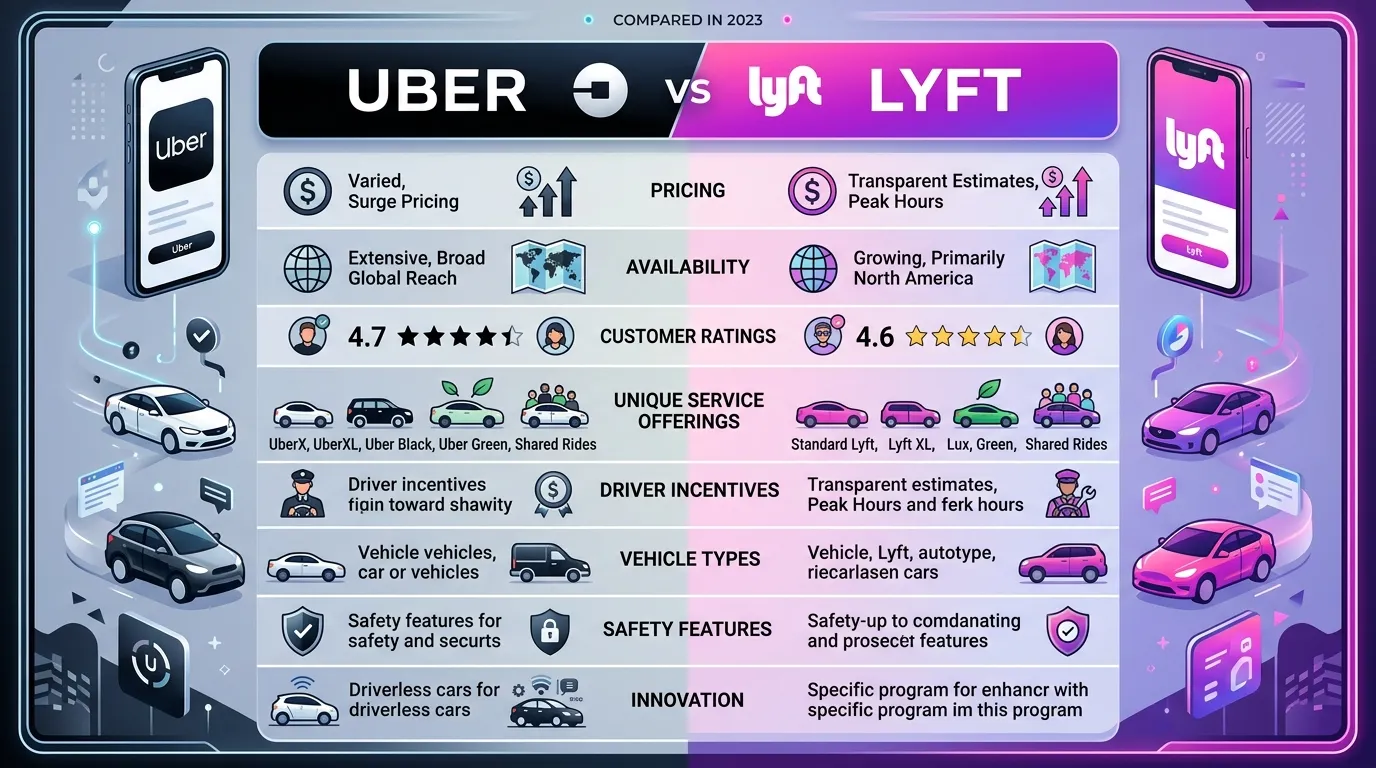
Dynamic pricing (or surge pricing) is a core component of both platforms. When demand spikes or supply drops in a geographic region, fares increase to balance the market. The details of the pricing algorithms are proprietary—and serve as key differentiators.
For example, differences in wait time, rate calculation, and surge thresholds mean that an Uber ride might cost more or less than a Lyft ride at the same time and place. The competition incentivizes both companies to develop ever-smarter technology to handle pricing, route optimization, and even loyalty perks.
Market Share and Geographical Presence
Uber’s Global Juggernaut
Uber’s international reach dwarfs any other ride-hailing app. As of 2024, Uber operates in more than 70 countries and over 10,000 cities. You can rely on Uber for a ride in cities as diverse as Paris, Singapore, London, and Cape Town. This global expansion has required complex negotiations with regulators, local taxi companies, and insurers—and often makes Uber the only familiar transportation app for world travelers.
Lyft’s North American Focus
Lyft, meanwhile, remains committed to North America. From its San Francisco headquarters, Lyft’s presence is visible in nearly every U.S. city and several Canadian hubs. This focus allows the company to double down on market share domestically, rather than stretching resources to chase overseas markets. Riders asking “are Uber and Lyft the same company” will notice the absence of Lyft abroad—while Uber is almost always available.
Financial Performance and Funding History
The Venture Capital Era
Both Uber and Lyft’s explosive growth was fueled by billions of dollars in venture capital investment. Subsidizing ride fares, incentivizing new drivers, and expanding to more cities—all this required enormous cash burn for much of the 2010s. Investors bet on the prospect that the global transportation market would make early losses worthwhile.
The Push for Profitability
The transition to public companies in 2019 brought a new sense of discipline to both brands. Uber, with its diversified verticals (including Uber Eats and Uber Freight), has found pathways to profitability. Lyft, with its laser-sharp focus on North American rides, faces more volatility in earnings but benefits from greater specialization.
Key profit drivers for both companies include raising commission rates, increasing ride volume, leveraging data analytics for efficiency, and investing in future technology like autonomous vehicles and AI-optimized routing.
Key Differences Between Uber and Lyft
A clear-eyed look at the data serves to illustrate the essential differences:
|
Feature |
Uber |
Lyft |
|---|---|---|
|
Founding Year |
2009 |
2012 |
|
Original Concept |
Premium Black Car Service |
Community Carpooling |
|
Global Reach |
10,000 cities, 70+ countries |
US and Canada only |
|
Food Delivery |
Uber Eats, groceries, alcohol |
None |
|
Freight Logistics |
Uber Freight |
None |
|
Stock Ticker |
NYSE: UBER |
NASDAQ: LYFT |
For more details on investment profiles and financial reporting, see this key differences summary.
The Competitive Landscape and Innovation
Company Culture and Public Image
Uber’s early days were marked by rapid, sometimes controversial growth. Aggressive expansion into cities and a hard-driving startup culture brought both accolades and scandals. Eventual changes in leadership shifted Uber’s tone, with greater emphasis on ethics and transparency.
Lyft, by contrast, built its brand around friendliness and fun—a stark difference in the Uber vs Lyft dichotomy. Marketing focused on social connection, and the company consistently projected an image of being the “good guy” in the ridesharing race.
Customer Loyalty and Subscriptions
Both companies recognize the importance of loyalty in a world where users might jump between apps in search of the best price. Hence, Uber One and Lyft Pink both offer discounts, priority support, and various perks to subscribers.
Rewards points, frequent rider status, and integrated mobility services help drive repeat business and keep numbers up for drivers as well.
Autonomous Vehicles
Both Uber and Lyft invested heavily in self-driving technology during the mid-2010s, only to later withdraw from developing their own hardware in favor of partnerships with specialized startups like Waymo and Motional. This pivot reflects a broader industry trend: integrating cutting-edge technology, even when R&D costs prove challenging for a single company.
In select cities, you may already be able to hail an autonomous ride—expanding the future possibilities for transportation apps comparison.
Technology, Safety, and Accessibility
Advancements in Rider and Driver Apps
Uber and Lyft invest continually in upgrading their app ecosystems. Innovations include in-app translation, voice commands, and built-in disability accessibility features. Both have developed “panic button” safety tools, live ride tracking for loved ones, and driver background checks that are among the most robust in any gig platform.
Accessibility Initiatives
Are Uber and Lyft the same company for accessibility? Not quite. Although both offer wheelchair-accessible ride options and service animal guidelines, coverage is often stronger in areas with established regulations. Demand for improved accessibility has prompted both ride-hailing companies to expand their services and invest in driver training relating to disability support.
Safety Records and User Protections
Transparency into driver safety records, masking rider phone numbers, and continuous monitoring of trip routes all contribute to a safer environment. Both companies allow for the reporting of inappropriate conduct, and both have customer support teams on call 24/7.
Impact on Drivers, Riders, and Society
Flexibility and Earning Opportunities
Are Uber and Lyft the same company in terms of driver opportunity? There are more similarities than differences here. Both promise flexible earnings, allowing drivers to create their own schedules and maximize income by leveraging both platforms. However, the actual earnings for drivers vary city by city, and are affected by demand, local minimum wage rules, and cost of vehicle maintenance.
Social Impact and Controversy
Uber and Lyft have changed how people move within cities, reducing reliance on personal vehicles and traditional taxis. They’re also key players in the gig economy debate, with ongoing scrutiny over employment classification, pay, and benefits for drivers.
Community partnerships, donations to local causes, and urban mobility initiatives show the potential positive social impact of ride-hailing companies—even as they face criticism for contributing to congestion and undercutting public transit usage.
Environmental Considerations
Commitment to Sustainability
Both Uber and Lyft have announced ambitious plans to move toward greener fleets and offset their carbon footprints. Initiatives include electric and hybrid vehicle bonuses for drivers, carbon-neutral ride options, and partnerships with cities to launch electric bike and scooter fleets.
Uber’s goal is to have 100% of rides in electric vehicles, bikes, or scooters by 2040. Lyft targets a 100% electric vehicle fleet by 2030. Riders can now often choose “Green” ride tiers as another small step in reducing emissions.
Studies and Impact Reports
Multiple independent studies have found that ride-hailing may increase congestion and vehicle miles traveled in certain urban areas. Both companies have responded by investing in data-driven research and collaborating with city planners to optimize resource usage and mitigate adverse effects.
Industry Outlook: The Future of Ride-Hailing Companies

Evolving Technological Landscape
Artificial intelligence, predictive analytics, and autonomous vehicles are poised to redefine the Uber vs Lyft competitive race. Expect further integration with public transit, shared e-bikes, flying taxis, and transportation-as-a-service platforms over the next decade. These advancements will continue to influence how riders choose between transportation apps—and how the difference Uber Lyft offers will shape daily life.
Regulation and Legal Trends
Regulatory pressure is unlikely to ease. Cities and states globally are revisiting labor law compliance, minimum wage for drivers, accessibility mandates, and data privacy protections. Uber and Lyft will likely continue partnering when mutually beneficial while maintaining independent legal strategies.
Consumer and Market Trends
The COVID-19 pandemic set back ride volume, but the rebound in travel and increased comfort with on-demand apps signal that the appetite for gig-based mobility remains strong. Millennials and Gen Z, in particular, reliably turn to ride-hailing for night life, airport commutes, and special events—helping cement these platforms’ place in modern urban culture.
Frequently Asked Questions (FAQ)
Are Uber and Lyft the same company?
No, Uber and Lyft are independent, publicly traded companies competing in the ride-hailing market. Though they offer similar services, their ownership, international reach, and business strategies differ greatly.
Which company is older, Uber or Lyft?
Uber was founded first, in 2009, originally as a luxury car service. Lyft followed in 2012 out of carpooling app Zimride. This age gap partly explains why Uber dominates globally.
Why do people think Uber and Lyft are the same?
Their nearly identical app experiences, ride tiers, and gig-economy driver models lead many to think they’re the same. However, key differences in strategy, service variety, and scope exist between these two transportation apps.
Does Uber own Lyft?
No, there’s no corporate connection. Uber Technologies, Inc. and Lyft, Inc. are separately traded and run companies.
Can a driver work for both Uber and Lyft?
Yes—most drivers are contractors, not employees. Many take advantage of both platforms to maximize earning potential, which is allowed in their respective terms of service.
How do their prices compare?
Both use dynamic pricing based on location, demand, and supply, so prices fluctuate throughout the day. For direct comparison, see this price comparison overview on Rideorbis.com for up-to-date rates and savings tips.
Does Lyft offer food delivery like Uber Eats?
No, Lyft has chosen to focus on rides and shared mobility options, while Uber has made Uber Eats a core part of its business—even during the pandemic.
Are Uber and Lyft available internationally?
Uber operates globally in over 70 countries, while Lyft is available only in the U.S. and parts of Canada. International travelers will need to check app availability ahead of time.
What are Uber One and Lyft Pink?
Uber One and Lyft Pink are customer subscription programs. Uber One bundles ride and delivery discounts; Lyft Pink gives subscribers discounted or priority rides, along with perks for bike and scooter use.
Do Uber and Lyft use self-driving cars?
Select U.S. cities offer autonomous vehicles on both platforms, thanks to partnerships with companies like Waymo and Motional. The scope of these programs continues to expand as technology and regulations mature.
Conclusion
So, are Uber and Lyft the same company? Despite shared DNA as pioneers in the ride-sharing revolution, they are fierce, separate competitors with distinct regional strategies, business models, and product offerings. Uber is the global, diversified powerhouse, while Lyft excels at serving North America with user-friendly, community-spirited service.
Deciding which platform to use—or drive for—means considering location, ride needs, personal values, and more. As the gig economy continues to influence the future of work and urban transportation, both Uber and Lyft will keep shaping how we get around for decades to come.
Whether you’re a rider hailing a quick trip home, a driver hustling for extra income, or an investor watching the transportation apps comparison, the answer to “are Uber and Lyft the same company” is a definite no—but their rivalry is the engine fueling the future of travel.
